


A team of professionally certified consultants provides personalized spiritual guidance, integrating Eastern and Western wisdom to help you explore the path of inner growth.

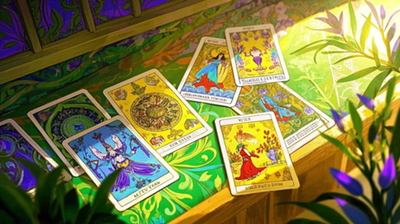
Deeply researching the mysteries of Tarot, delivering thousand-year-old symbolic wisdom, dialoguing through card arrays and intuition to unlock life answers and self-awareness.

Taking stars as a mirror, interpreting the cosmic energy code, combining modern psychological astrology to reveal personal potential and life cycle rhythms.

Using natural energy tools such as crystals, sound bowls, and the subconscious to harmonize physical and mental frequencies, activate self-healing power, and reshape balance and harmony.


Why Tarot is the scientific journey of life?
“Xiang Xiang”, a student of the Chinese Tarot Astrology Association's mentor “Luoshu”, said,
The 78 cards form a system of life archetypes,The Major Arcana starts with the 0 Fool to connect life's journey stages and thematic lessons,then ultimately returns to a new starting point,Metaphorically representing the complete path of human consciousness evolution,and condensing an individual's psychological development history.Minor Arcana represent various life events,With the four elements corresponding to real-world dimensions,deconstructing complex human nature into analyzable symbolic combinations.
These cards condense the collective unconscious, which reflect the human psyche.
The random principle of Tarot,also conforms to probability laws.
Psychology confirms the human unconscious guides selection of most relevant cards (Jung's "synchronicity"),similar to quantum mechanics' observer effect (wave-particle duality).True "science" is just one "grammar" humans use to understand existence,Never the only path to truth.
While Tarot offers another grammar of possibilities,a grammar closer to the "human heart",perhaps this is another kind of "science".
The 22 Major Arcana, from No.0 [The Fool] to No.21 [The World], form a complete path of life growth,also known as "The Fool's Journey".
Starting point (0 The Fool): Symbolizes innocence, freedom, the unknown and adventure.Just like when we first embark on life's journey - naive yet full of possibilities.Experience (Cards 1-20): Each card represents a life lesson -Career, work, power, love, sacrifice, awakening, balance...These are life stages we must face, understand and experience.
End point (21 The World): Symbolizes integration, completion, self-actualization,returning to the world, achieving unity between self and the world.
This clearly structured, phased design demonstrates systematic thinking.
The essence of science is explaining complex reality by building models.
Similarly, Tarot describes human inner evolution and states through symbolic systems.Each card is a "symbolic unit", like variables or parameters in science.
Moreover, science doesn't examine phenomena in isolation,but explores dynamic relationships between variables.So does Tarot - while each card has independent meaning, in a complete reading,
meaning depends on combinations between cards.Different positions, sequences, upright/reversed orientations all affect the message.
This "combinatorial interpretation" mirrors science's approach to combining variables.Therefore, although Tarot is a metaphysical tool,viewed systematically, it doesn't conflict with science's essence,but shares many commonalities.
Luo Shu's comment: Student Seventeen's understanding is very accurate,science's essence is explaining complex reality by establishing models and rules.
The esoteric and mystical world isn't without rules,but currently we can't fully explore them all.
“Ruo Yu”,a student of Chinese Tarot Astrology Association mentor “Luo Shu” says,
"There is no superstitious knowledge, only superstitious and lost people"
In the context of contemporary cognitive science, the proposition that "Tarot is a scientific life journey" presents unique dual attributes.As a non-positivist symbolic system, Tarot follows universal laws of human cognition, while maintaining open dialogue with empirical science.
This paradoxical unity, requires us to re-examine its scientific essence and cognitive value from an interdisciplinary perspective.
I believe this statement can be understood from two perspectives:
1. Discussing the scientific logic and application rules in Tarot interpretation.
2. How to use a rational perspective on this as yet unproven knowledge?
Luo Shu's comment: Excellent perspectives, consistent with Ruo Yu's card-reading style of multiple meanings per card. This proposition also has multiple meanings.
1. Discussing the scientific logic and application rules in Tarot interpretation
Psychologist Jung's "psychological pattern" theory provides a cognitive science foundation for Tarot interpretation. His synchronicity principle reveals the acausal connection in Tarot divination sequences, when the querent's subconscious projection resonates with card symbols, this psychological schema forms what Jung called "meaningful coincidence".
The progressive sequence of Tarot's 22 Major Arcana, essentially concretizes Jung's individuation process,each stage of the Fool's Journey corresponds to specific thresholds of psychological development.
Tarot's four-element system (Wands-fire, Cups-water, Swords-air, Pentacles-earth)echoes remarkably with modern cognitive science's modular theory. Each element represents specific cognitive dimensions: Fire corresponds to the limbic system's emotional responses, water involves limbic resonance in emotional connection, air carries prefrontal cortex's logical analysis, the earth element, on the other hand, anchors the habitual pattern of the basal nucleus. This classification shows striking isomorphism with neuroscience's brain region functional divisions.
The combinatorial rules of card arrangements follow set theory's basic principles. When interpreting 3-card spreads from 78 cards, the 37,800 possible combinations are concrete applications of Bayesian probability in symbolic domains. Experienced readers dynamically adjust conditional probabilities, constructing explanatory models matching the querent's cognitive schemas.
2. How to rationally view unproven knowledge
Core principle: Approach non-scientific tools with scientific attitude
Tarot's imagery and stories are essentially "psychological translators"
Like using weather metaphors for moods (sunny=happy, rainy=sad), Tarot uses cups, swords etc. to represent different emotional states. When you say "drawing Three of Swords feels heartbreaking", you're actually converting abstract sadness into concrete imagery— three swords piercing a heart— this visualization helps us better understand our inner world.
Effectiveness matters more than correctness, scientific theories require continuous testing, so does Tarot interpretation. For example, using "The Lovers" to predict relationship development, if reality contradicts, it's not that the card was wrong, but reminds us to adjust our interpretation approach. This resembles when weather forecasts are inaccurate, meteorologists improve their models, we refine card understanding through actual experiences.
Meanwhile we can use dual verification to safeguard rationality. Simply put, it's "Tarot + reality" double insurance. When you draw "Eight of Pentacles" predicting work rewards, take it as a reminder: pay special attention to work outcomes in coming weeks, while maintaining normal effort. If results match predictions, the interpretation was helpful; if not, examine where deviations occurred. This resembles doctors observing treatment efficacy, adjusting prescriptions based on outcomes.
As readers we must guard against overinterpretation traps, especially important for both us and clients, human brains naturally seek patterns, sometimes forcibly connecting random events. Like panicking over three "Death" cards in a row, when actually just subconscious noting recent changes. This requires calm analysis: Is there truly a major life transition? Or did anxiety amplify the cards' message? Maintaining this examining attitude, like seeing "a black cat on the road", noting it may suggest caution, without altering originally reasonable travel plans.
Here are practical suggestions I've set for myself:
View Tarot as "cognitive mirror" not prophecy book.
After each reading, record actual outcomes for verification. When reality clearly conflicts with interpretation, prioritize trusting actual experience. Regularly review past spreads, observing evolution of cognitive patterns.
From modern psychology's perspective, Tarot resembles an ancient "thinking training toolkit". It activates associative thinking through symbolic systems, expanding cognitive boundaries via visual thinking. When we maintain rational vigilance of "this may be suggestion", while utilizing intuitive resonance of "this imagery is insightful", Tarot truly becomes scientific tool for exploring self-awareness—
just as navigators trust compass direction, while knowing to adjust course with celestial observations, this is the true essence of "scientific life journey".
Psychological concepts: What are the differences between consciousness, subconsciousness, and unconsciousness?
What is consciousness?
Psychological understanding of consciousness has both broad and narrow definitions. Broad consciousness refers to the brain's response to the objective world,showing psychology's philosophical origins as a special academic phenomenon,viewing consciousness as the totality of mental phenomena given reality,a subjective phenomenon of personal direct experience,manifesting as the unity of cognition, emotion, and will.Narrow consciousness refers to awareness and attention to external world and self,modern psychology mainly discusses the narrow definition.
Broad consciousness:
Cognition: human pursuit of knowledge and rationality about the world,unified with the essence of understanding.
Emotion: refers to feelings,human perceptions and evaluations of objective things.
Will: refers to volition,mental states like self-restraint, perseverance, confidence shown when pursuing goals.
What is the human subconscious?
Human instinct is a form of subconsciousness,subconsciousness is a psychological term.
The subconscious consists of mental activities that have occurred but remain unnoticed,"mental processes that have occurred but haven't reached conscious awareness".
Subconsciousness and consciousness together constitute all human mental/cognitive activities.
We cannot directly perceive the subconscious,yet it fundamentally influences conscious experience:
It affects how we view ourselves and others,how we interpret daily activities,our rapid life-or-death judgments and decisions,and actions taken through instinctive experience.
The subconscious performs work essential for human survival and evolution.It includes instincts, impulses, childhood imprints, environmental influences, beliefs, personality, values, etc.
Freud: Consciousness, Subconsciousness (including preconscious and unconscious)
Sigmund Freud (May 6, 1856 - September 23, 1939),Austrian psychiatrist, psychologist, founder of psychoanalysis.
In 1873, he enrolled at the University of Vienna Medical School,and earned his medical doctorate in 1881.From 1882-1885, he worked as a physician at Vienna General Hospital,conducting research in brain anatomy and pathology.He then established a private practice treating mental disorders.
In 1895, he formally proposed the concept of psychoanalysis.His 1899 publication "The Interpretation of Dreams"marked the official formation of psychoanalytic psychology.
In 1919, he founded the International Psychoanalytical Association,signifying the final establishment of the psychoanalytic school.He was awarded the Goethe Prize in 1930.In 1936, he became a member of the British Royal Society.He pioneered new frontiers in unconscious mind research,advancing dynamic psychology, personality psychology and abnormal psychology,establishing new foundations for modern medical models,and providing crucial theoretical support for 20th century Western humanities.
Initially, Freud divided "subconscious" into preconscious and unconscious:
In Freud's psychological theory,unconscious, preconscious and consciousness are three distinct levels,yet interconnected as a system.Freud used this metaphor:
The "unconscious system" is an entrance hall,where mental impulses crowd like individuals,pushing against each other.A second room serves as reception area,where consciousness resides.A guard stands between them,checking mental impulses,denying entry to disapproved impulses.Admitted impulses enter the "preconscious system",and when noticed by consciousness,become "conscious".
He divided the subconscious into two types: “the subconscious, which is latent but can be transformed into consciousness,” the preconscious, and “the subconscious, which is repressed and cannot be made conscious by the usual means,” the unconscious.
What did psychologist Jung think of Tarot cards? A journey to explore cosmic wisdom
The psychological genius "Jung"
Jung was a student of psychoanalytic master Freud, and the most outstanding among his students.Jung particularly inherited Freud's unconscious theory, expanding it by dividing the unconscious into "personal unconscious" and "collective unconscious".
Jung's original collective unconscious describes: Humans share common psychological functions that inherit ancient unconsciousness through heredity.
This ancient unconsciousness Jung called "collective unconscious". The shared human psychological functions are human "archetypes".
The life journey "archetypes" used in Tarot prediction and counseling precisely correspond to Jung's human "archetypes". The Tarot reading process is also the psychological process of connecting to human "collective unconscious".
Beyond this, Jung's contributions include: He was psychology's first master to seriously study spirituality, mysticism and psychic phenomena. In early 20th century he encountered Chinese "Tao Te Ching" philosophy, which elevated his thinking beyond other psychologists of his time.
Ultimately from Eastern "I Ching" he derived the "Synchronicity" principle. Synchronicity explained many phenomena that cannot be explained by the causal theories of Western thought,
providing scientific rationale for divination, Tarot, astrology etc.
Jung was Freud's most controversial disciple, for introducing mythology, religion, philosophy and soul - topics Freud ignored - into psychoanalysis.
Jung was a crucial transformer and promoter of modern thought, to overlook him is to overlook psychoanalysis' complete ideology.
Synchronicity Principle
Starting with Eastern "I Ching" and Tarot research, Jung conducted various divination studies, later proposing the synchronicity theory.
This is why there's a connection between Tarot and psychology.
Tarot divination starts with shuffling, then various spreads, with the leader/interpreter conducting the reading.
The entire process deeply links and explores "personal" and "collective" unconscious,making Tarot reading a form of psychotherapy.


